
How to choose the right sandstone colour: layout, sun direction and trees
Colour is the first thing people pick and the one they most often regret. A stone that looks perfect in a showroom can look flat in a shaded garden or glaring in full sun. Here is how the layout, the direction your patio faces and the trees around it should shape your choice, and a free tool to preview it.
1. Start with direction and light
Light changes colour more than anything else. The advice below is for gardens in the northern hemisphere, which covers the UK, Ireland and the US. Work out which way the patio faces and how long it is in sun, then match the stone.
| Patio faces | What happens | Colours to consider |
|---|---|---|
| South | Strong sun for much of the day. Pale stone can feel bright and glary, dark stone can get warm underfoot. | Mid tones: Kandla Grey, Raj Green, Autumn Brown, Raj Blend |
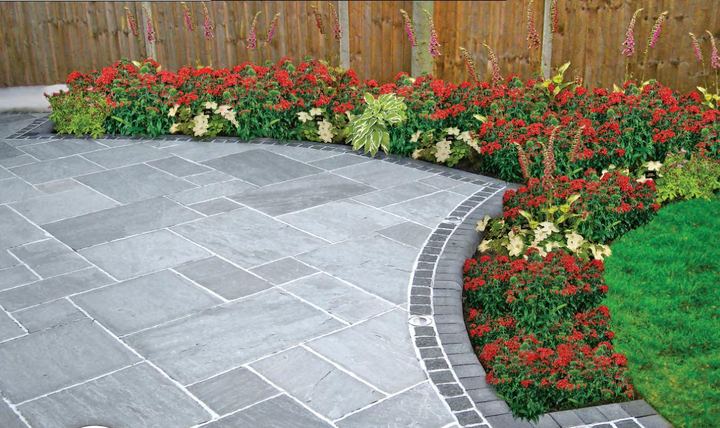
| West | Warm evening light pulls colours towards gold and orange. | Cooler greys and blue-greys balance it: Kandla Grey, Kota Blue, Ravina |
| East | Morning sun, then shade. Light is soft and fairly cool. | Warmer buffs and golds keep it inviting: Buff Rippon, Camel Dust, Teak Wood |
| North or heavy shade | Little direct sun. Cool stone can look cold, and damp can bring moss and algae. | Lighter, warmer stones: Yellow Mint, Ita Gold, Fossil Mint, Beige |
These are guides, not rules. Cloud cover, nearby walls and fences change the picture, so check your own garden. If you are in the southern hemisphere, swap north and south.
Wet and dry
In the UK and Ireland your patio is often wet. Wet stone looks darker and richer, and subtle colours can look different. Look at samples dry and wet. In the visualiser, tick "Show wet stone" to see the effect.
2. Think about the layout
- Size of the space. A small courtyard rarely needs a busy blend. A single calm tone keeps it feeling larger. Large patios can carry multi-tone blends such as Raj Blend or Rainbow without looking messy.
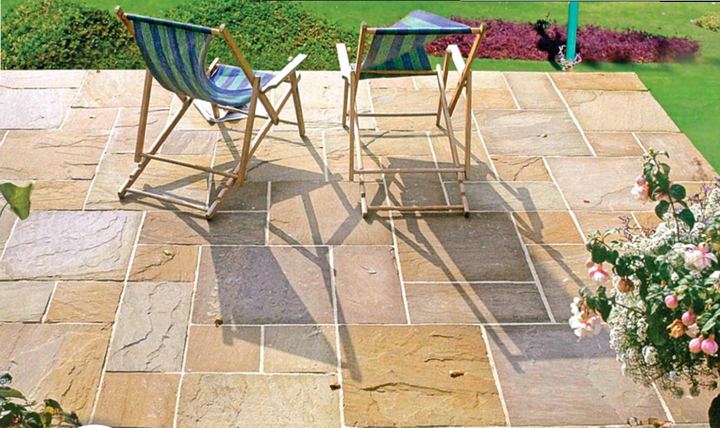
- Slab size. Larger slabs such as 60 x 90 and 60 x 60 have fewer joints, so the surface reads calmer and more modern. A mixed project pack with several sizes looks more traditional and suits larger, informal areas.
- Pattern direction. Joints draw the eye along their length. Running them towards a view or the end of the garden lengthens the space. Running them across the width makes it feel wider. Laying at 45 degrees adds interest, but it needs more cuts and more spare slabs.
- Joint colour. Pale joints highlight each slab and give a lighter, busier look. Darker joints blend slabs together and look sharper.
- Steps, borders and edges. Plan how the stone meets walls, planters and lawn. A calm field of paving with a contrasting border can look good, but samples help you check the combination.
3. Allow for trees
- Shade. Dappled or heavy shade changes how stone looks through the day and cools the colour. Lighter, warmer stones help.
- Moss and algae. Shade and damp encourage them, and they show on pale stone. Good drainage, a sensible fall and regular cleaning help. See our sealing and cleaning guide.
- Leaves and sap. Wet fallen leaves can leave marks on light stone. Some trees drip sticky honeydew or drop berries that stain. Mid tones with natural variation hide the odd mark better than very pale or very dark stone.
- Roots. Roots can lift paving if the base is weak. Keep paving clear of large trunks where you can, and ask your installer about the base.
- Seasons. Deciduous trees give shade in summer and let light in during winter, so the same patio looks different through the year.
4. Match the house and the garden
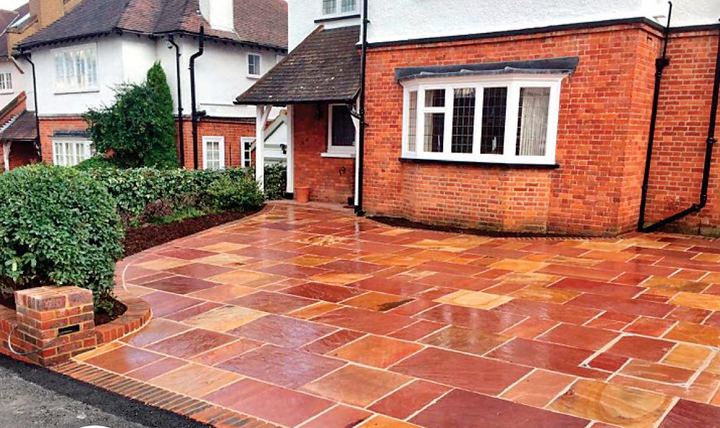
Look at the brick, render, roof and window frames, because the patio sits right next to them. Warm brick usually goes well with warm buffs, browns and golds. Cooler render and slate roofs suit greys. Then look at planting: greens and pinks usually suit natural tones such as Raj Green, while very bright flowers can compete with strongly coloured stones such as Modak or Chocolate.
Try it on your own layout
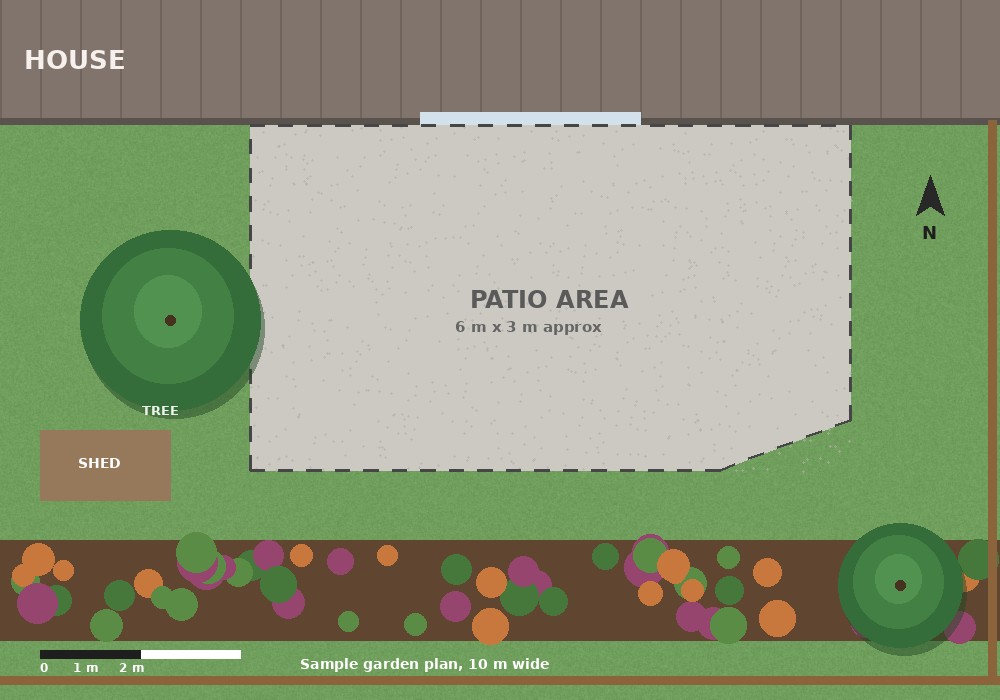
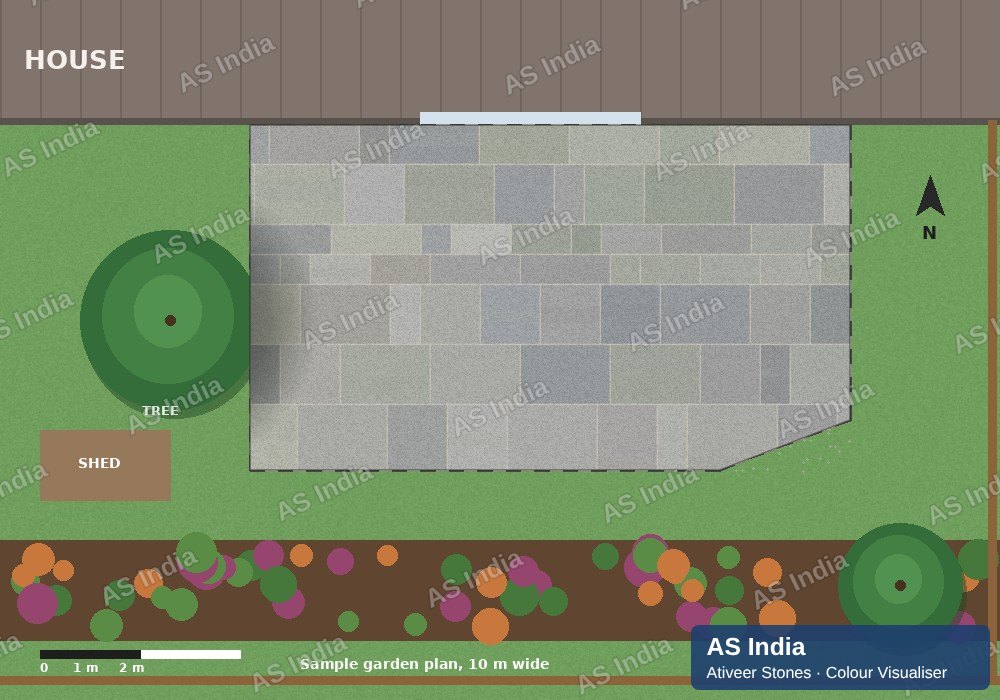
Upload a plan, sketch or photo, outline the patio, add tree shade and compare two stones side by side.
Open the stone visualiser5. Always check a sample
- Pick a shortlist of two or three stones, using the tool and the guidance above.
- Order samples and look at them in the actual spot, at different times of day, wet and dry.
- Look at several slabs, not just one. Natural stone varies, and a full pack will show a range of colours.
- Ask for videos of the actual lot you are buying. We film every lot and every pack and share the videos before dispatch.
Ready to start? Request a sample or see the full stone range.
For partners
If you sell stone to homeowners or landscapers, use the visualiser in your meetings. Upload the client's plan, try two or three colours and sizes, save the images and send them to the client. It speeds up decisions and avoids returns caused by the wrong colour. Read about our partner programme.
Planning an order?
Tell us the stone, sizes, finish and quantity. We reply with a quote and can send samples.
Enquire on WhatsAppEmail: vs.exm@yahoo.co.in